- Time:2026-09-10
- Venue:1A, 2nd Floor, Hall 1
- Language:CN
Organizer
Laser Processing Committee of China Optical Society
China International Optoelectronic Expo
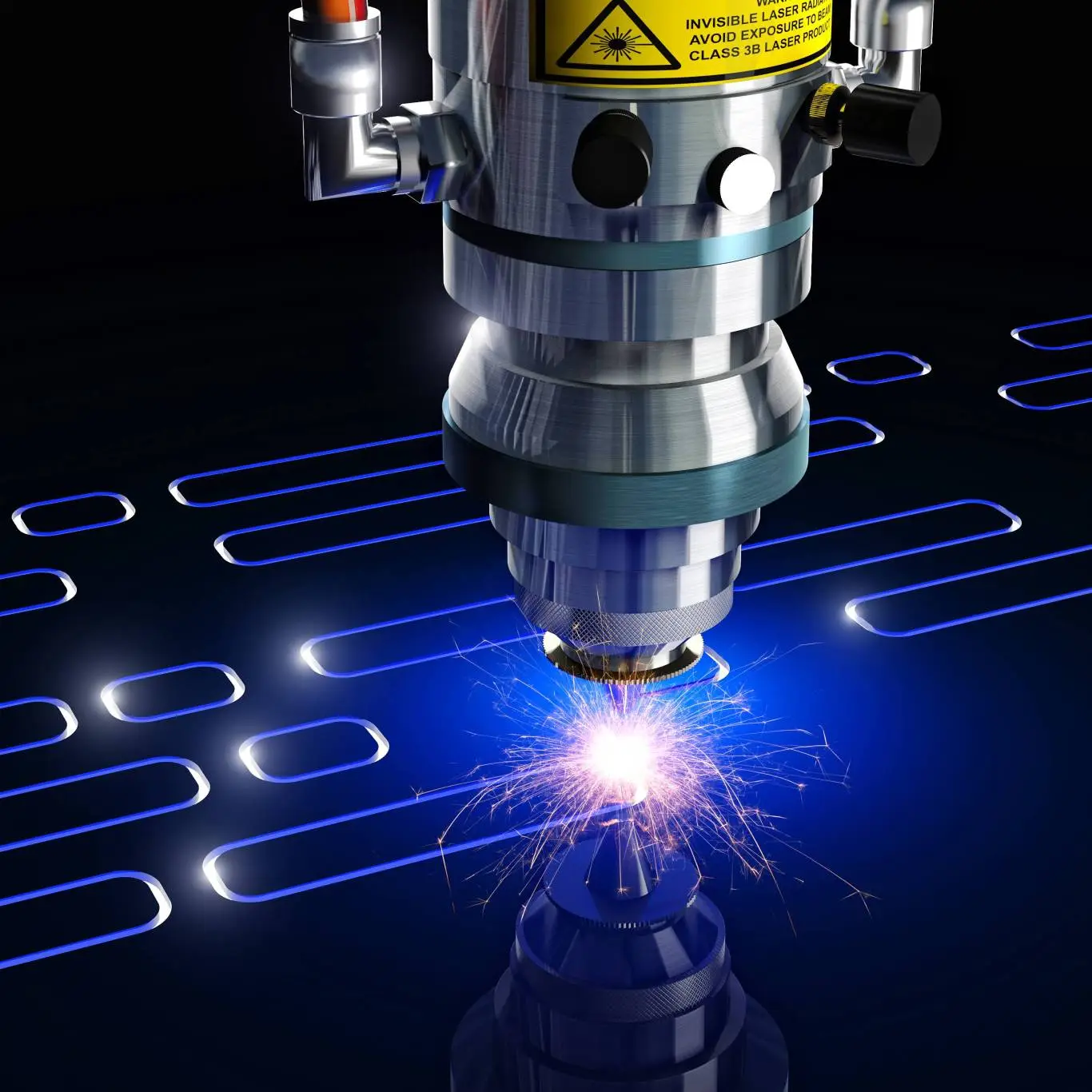
Global manufacturing is shifting from traditional automation to extreme and ultra-precision manufacturing. Strategic sectors like aerospace, semiconductors, biomedicine, and new energy demand ever-higher processing quality, thermal control, and aspect ratios. For example, traditional machining of film cooling holes in turbine blades often causes microcracks and recast layers. While dry laser processing avoids contact, it suffers from heat buildup when cutting superalloys, SiC composites, or diamond, leading to slag, heat-affected zones (HAZ), and microcracks—a major bottleneck for high-end equipment.
This disruptive cold energy beam process uses a thin water jet as an "optical fiber" to deliver laser light via total internal reflection. The jet's cooling action rapidly removes heat between laser pulses, achieving efficient removal with damage-free cooling. Known as "the future of precision manufacturing," it excels in low-damage, high-efficiency cutting/drilling of metal matrix composites (MMCs), ceramic matrix composites (CMCs), and semiconductor wafers. Yet, this is just one part of the laser-water interaction. To increase flexibility, efficiency, and application range, single laser methods are no longer sufficient. The industry is now focusing on multi-energy hybrid manufacturing—combining lasers with ultrasound, electromagnetics, additive processes, and water-based methods (e.g., water-jet guided, water-jet assisted, and underwater laser processing).
To break down technology silos, CIOE and the Laser Processing Committee of the Chinese Optical Society are jointly hosting the "Water guided Laser Precision Processing Technology and Application Forum." The event will bring together top research institutes, academic leaders, and industry players across the laser supply chain.


